After the Monolith: When Design Tools Stop Being Destinations
For decades, becoming a digital designer meant mastering a small set of applications: Photoshop, Illustrator, Sketch, Figma.
The tools changed, but the relationship stayed the same. The software defined the workflow. Designers learned its capabilities, interfaces and limitations.
Then the applications grew.
Drawing became prototyping. Prototyping became collaboration, documentation, handoff, presentations, asset generation and code. General-purpose tools became platforms because software was expensive to build and broad products were easier to justify.
AI is changing that logic.
As software becomes cheaper to create, the minimum useful audience for a tool gets smaller. At the same time, major platforms are becoming more programmable and increasingly able to act through AI.
The result is not simply that new AI products replace old applications. The more important shift is that design tools stop being fixed destinations. They become adaptable systems: platforms that agents can connect to, small utilities that teams can generate, and interfaces that can be shaped around a particular problem.
Software that does not need to become a product
Imagine a tool that generates one specific kind of presentation mock-up. It places production components into a defined composition, applies a small set of visual treatments and exports the result.
There may be no market for it. It may only serve one team.
Previously, that would have been enough reason not to build it. Now the calculation is changing: for some narrow tasks, creating the utility can become easier than repeatedly working around its absence.
This idea has a longer intellectual history than the current AI boom. Ink & Switch describes “malleable software” as an ecosystem in which people can adapt tools to their own needs with much less friction, rather than continually adapting their workflows to fixed applications. [1]
Generative development gives that ambition a new practical route. It lowers some of the effort required to move from an idea for a tool to a working interface. That does not eliminate engineering, maintenance or quality concerns. It does change which ideas are worth trying.
For designers, the question starts to move from “Which tool should I use?” towards “What tool would make this problem easier?”
“Software begins to behave less like a fixed environment and more like a design material.”
The platforms are adapting too
This is not a rebellion against large applications. The incumbents are responding to the same shift.
Adobe has been adding agentic workflows inside Creative Cloud applications, describing an assistant that can orchestrate multi-step work while keeping outputs editable. Canva AI 2.0 similarly combines conversational creation, agentic editing and Canva Code inside its broader creative environment. Figma Make is moving closer to production code, including workflows that connect a local codebase, support visual edits and annotations, and carry changes through Git and pull-request processes. [2],[3],[4]
Those are company descriptions of their own products, so they should not be read as independent evidence that these approaches are better. They are useful for something narrower: showing that the largest creative platforms are changing their architecture and interaction models in response to the same pressure.
The important change is not that these products contain AI. It is that AI weakens the boundary between intention and operation.
Instead of selecting every command one by one, a designer can increasingly describe an outcome and let the system assemble part of the sequence. Menus and toolbars do not disappear, but they are no longer the only route to capability. Context, constraints and judgement become more important.
“The application remains, but the interface is no longer the whole product.”
Design and development begin to converge
Product work has traditionally involved at least two representations: a design artefact and an implementation. Much of the industry's infrastructure exists to manage the distance between them.
Design systems, tokens, documentation, developer modes, specifications and handoff all help one representation survive its translation into another.
AI-assisted development makes that separation less rigid.
Paper is useful here as an example of a younger hybrid environment. Its documentation supports importing HTML into the design environment and connecting AI agents directly to design files through MCP. Figma is approaching the same broad problem from the other direction: its Make workflow can connect visual editing to an existing codebase, while its MCP tooling can move structured design context into development environments and write native content back to the canvas. [4],[5],[6]
Neither approach makes the traditional canvas obsolete. Nor does either prove that design and development should collapse into a single discipline. They do, however, make the boundary more negotiable.
“How much value is there in maintaining separate representations when design and implementation can increasingly act on shared components, rules and context?”
There are still good reasons for separation. Production code carries architecture, state, performance, accessibility, security and operational constraints that a visual canvas can hide. A design environment also gives people room to explore without prematurely committing to implementation details.
The more plausible change is continuity rather than collapse. A designer can work visually while an engineer works directly with implementation, with both drawing from increasingly shared context.
Tools become connected infrastructure
Model Context Protocol makes this shift easier to see.
Anthropic introduced MCP in November 2024 as an open standard for connecting AI assistants to external systems and data. The protocol has since continued to evolve, including a July 2026 specification revision focused on scalability, extensions and stronger authorisation. [7],[8]
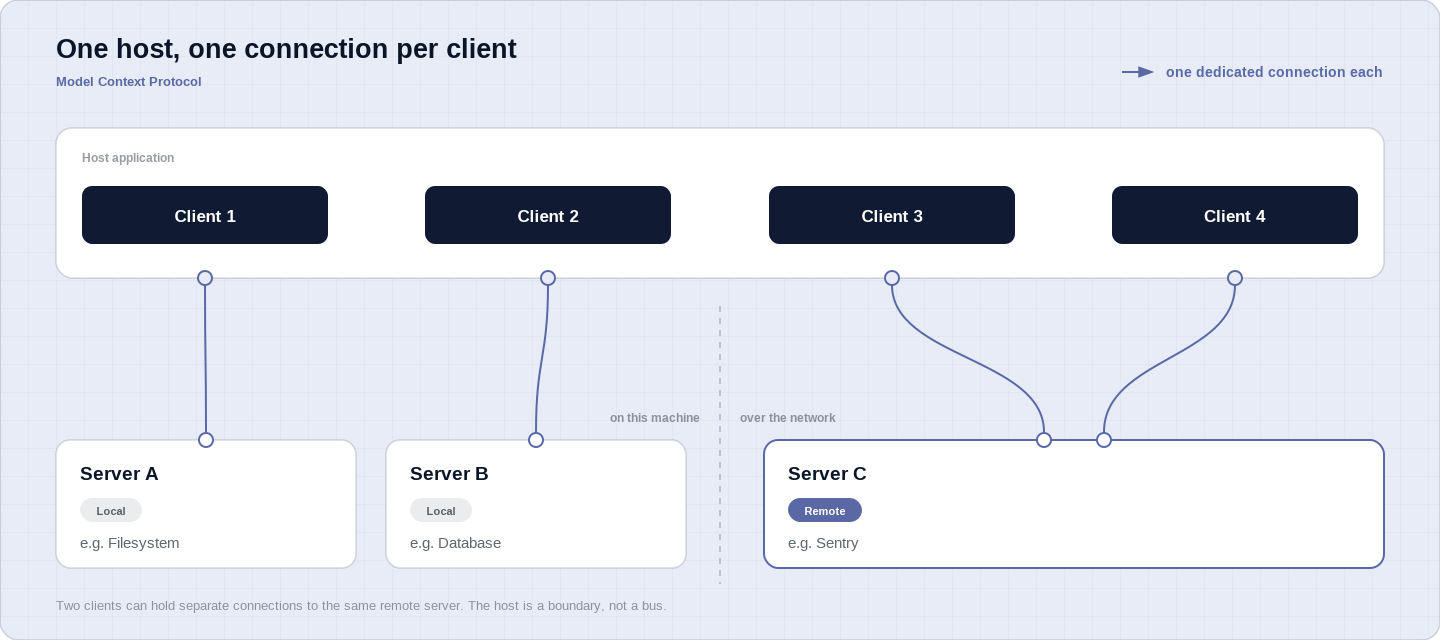
For design, the significance is straightforward. An AI system does not have to understand a design only from pixels or an exported file. Where a tool exposes structured context, an agent can work with components, variables, layout information, resources and actions.
Figma's MCP server, for example, exposes structured design context such as components, variables and layout data to compatible agents, and now supports creating or updating native Figma content in supported workflows. Paper documents a similar connection between AI agents and its design files. [6],[9]
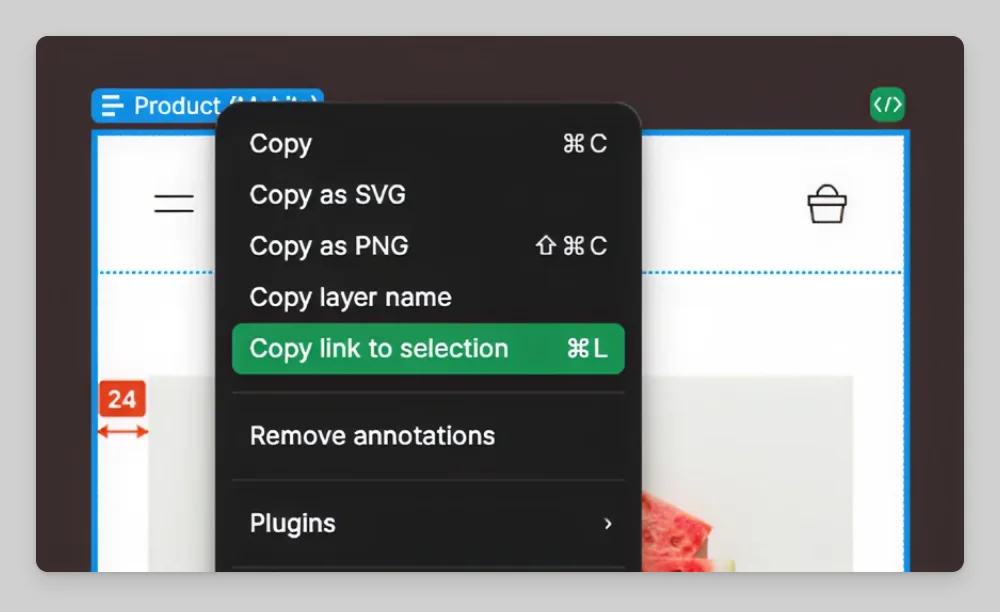
The broader implication is more important than either implementation. Applications become less self-contained.
An agent can sit across boundaries that people previously crossed manually: inspect one system, retrieve context from another, compare an implementation, then create or modify an artefact somewhere else.
“The design tool is no longer just an application with a canvas. It can become the relationship between platforms, protocols, data and task-specific utilities.”
The monoliths will remain
None of this gives us a good reason to assume that large platforms disappear.
Organisations need permissions, version history, governance, security, accessibility, documentation, support and predictable continuity. Small generated tools do not acquire those qualities simply because they are easy to create.
“Cheap software can create cheap technical debt.”
The stronger model is a layered ecosystem. Large applications can remain trusted systems of record while smaller tools handle narrow, temporary or highly specific needs.
The platform provides stability. The custom tool provides adaptability.
There is also a governance cost to agentic interoperability. The MCP ecosystem has spent substantial effort on authorisation and security, including OAuth-based access, token validation and enterprise-managed authorisation. That work exists because a connected agent is more consequential than a passive assistant: access to more tools and data increases both usefulness and the consequences of a mistake. [8],[10]
So the future cannot simply be “connect everything to the model”. Capability without boundaries is not a mature workflow.
What changes for designers
The professional shift may be more important than the technological one.
Software proficiency has often been easy to confuse with design proficiency because it is visible and measurable. But if tools become more adaptive and agents can operate parts of them on our behalf, knowing where every control lives becomes less distinctive.
Judgement becomes more visible.
Understanding the problem. Defining constraints. Recognising quality. Building coherent systems. Detecting when a convincing output is wrong. Knowing what must remain consistent across hundreds of generated variations. Deciding where automation helps and where deliberate human intervention matters.
These have always been design skills. More capable tools simply expose how important they were all along.
A designer who cannot use the tools of the job still has a practical disadvantage. But a designer whose main advantage is operating a particular interface efficiently has a different problem.
“The interface can increasingly operate itself. Judgement cannot.”
After the monolith
The future of creative software is unlikely to resolve into one winning interface.
Large platforms, specialist applications, generated utilities and temporary interfaces can coexist. Some tools will begin with a canvas. Others with code. Some will be operated primarily by people; others increasingly through agents. Some will exist only long enough to solve one problem.
The major platforms may therefore become less like sealed destinations and more like durable infrastructure that other tools and agents can use.
“This is not the end of design software. It is the loosening of its boundaries.”
For most of our careers, designers adapted themselves to the tools available to them. We learned their abstractions, accepted their workflows and invented workarounds for their limitations.
Now that relationship can become more reciprocal.
The tool can adapt to the designer.
And if creating a new tool becomes cheap enough, the most interesting question may no longer be which application wins.
“What would you make if the tool you needed did not have to exist yet?”
References
- Geoffrey Litt, Josh Horowitz, Peter van Hardenberg and Todd Matthews, “Malleable Software: Restoring User Agency in a World of Locked-Down Apps”, Ink & Switch, June 2025. Source
- Adobe, “More time to spend on your craft: Adobe brings the power of its creative agent to Creative Cloud apps”, 18 June 2026. Source
- Canva, “Introducing Canva AI 2.0: Reimagining how the world creates”, 2026. Source
- Iris Lin and Jesse Lumarie, “Figma Make, now on your local code”, Figma, 28 May 2026. Source
- Paper, product documentation. Source
- Figma, “Guide to the Figma MCP server”. Source
- Anthropic, “Introducing the Model Context Protocol”, 25 November 2024. Source
- Model Context Protocol maintainers, “The 2026-07-28 Specification”, 28 July 2026. Source
- Figma, “Get started with the Figma MCP server”. Source
- Model Context Protocol, authorisation and enterprise authorisation documentation, 2026. Source